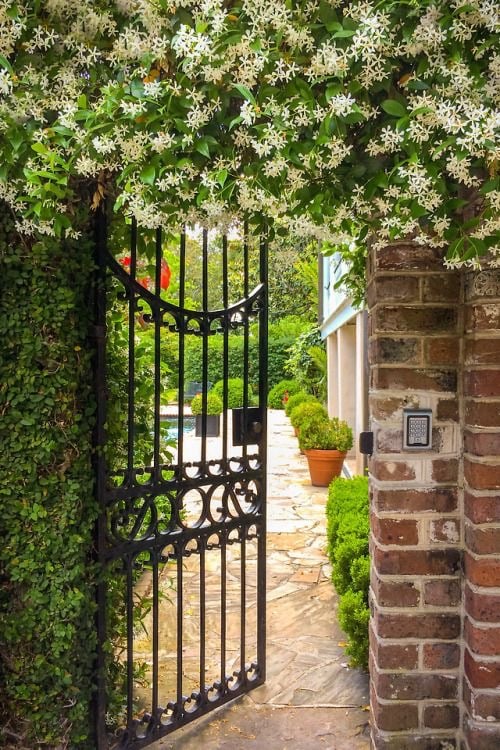
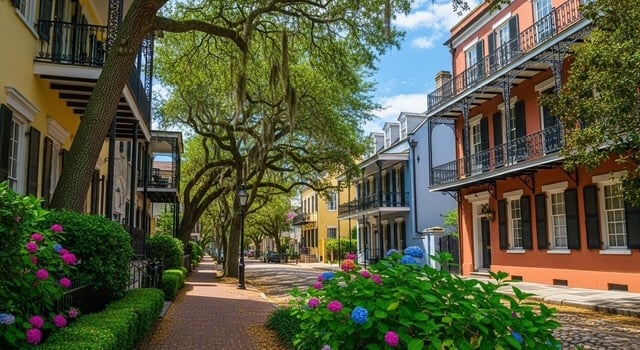
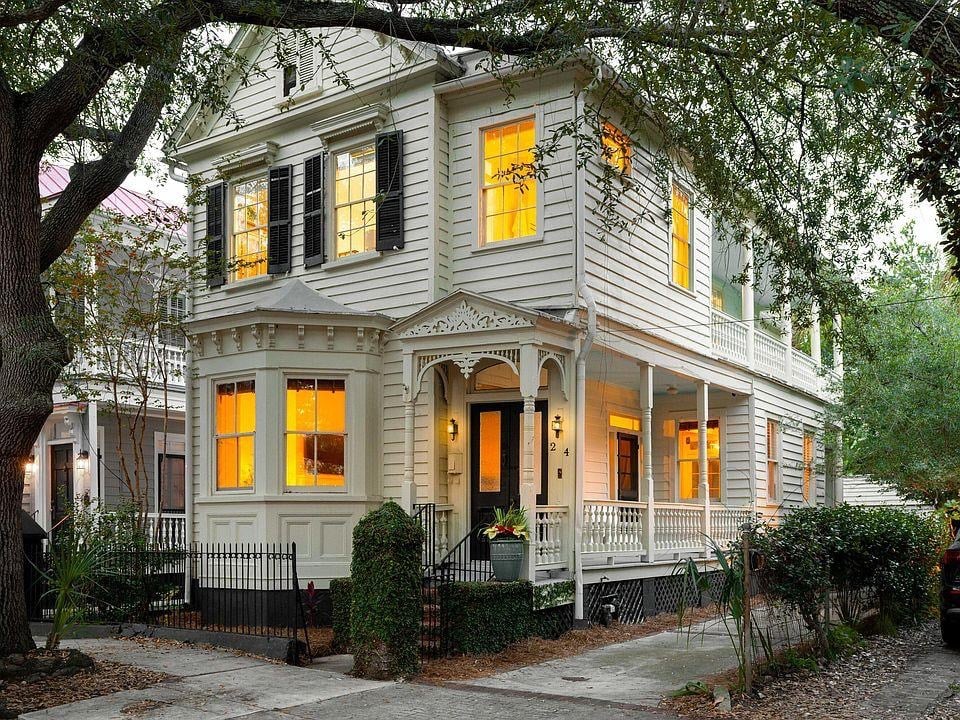
April is one of the most beautiful months in Charleston. The city seems to wake up all at once—azaleas bursting into color, window boxes overflowing, and the first hints of jasmine beginning to drift through the historic streets. It’s the time of year when Charleston feels especially alive, and nowhere is that more magical than behind the iron gates and garden walls of the historic district, where some of the city’s most enchanting courtyards quietly bloom out of view. One of the great charms of Charleston is that some of its most beautiful spaces are hidden. You can walk past a historic home South of Broad or along one of the narrow historic streets and see little more than an iron gate or a high brick wall. But step through that gate and suddenly you’re in a completely different world—lush gardens, old brick pathways, fountains quietly trickling, and jasmine climbing the walls. These courtyards feel timeless, as if they’ve always been peaceful garden retreats. But historically, that couldn’t be further from the truth. In the 18th and 19th centuries, these spaces were working yards, and they were the operational heart of the property. Daily life for the household happened here. Kitchens were frequently separate outbuildings because of the risk of fire, so meals were prepared in small kitchen houses behind the main residence. Laundry was boiled and scrubbed in large iron pots, then hung on long lines stretched across the yard to dry in the coastal breeze. Animals were common as well. Chickens wandered through the yard providing eggs for the household, and in some cases there might even be a cow kept for milk. Deliveries came through large carriage gates, wood and coal were stacked nearby, and cisterns collected rainwater used for washing and cooking. In other words, these yards were practical, busy spaces filled with the everyday activity required to run a household long before modern conveniences existed. Smoke from cooking fires, livestock moving through the yard, and the constant rhythm of daily work meant these spaces were far from the tranquil gardens we admire today. Over time, as Charleston evolved and historic homes were restored, these workyards slowly transformed. Outbuildings were removed or repurposed, carriage paths became brick courtyards, and homeowners began turning these once-utilitarian spaces into intimate outdoor rooms. Fountains were added. Iron gates became focal points. Camellias, azaleas, gardenias, and climbing Confederate jasmine softened the old brick walls. What were once practical work areas gradually became private sanctuaries tucked inside the historic city. Today, these hidden courtyards are one of the most magical features of Charleston homes. They create quiet outdoor living spaces in the heart of the historic district—perfect for entertaining, dining outdoors, or simply enjoying the beauty of the city in a more intimate way. And in April, when everything begins to bloom, they truly come alive. Jasmine begins to perfume the air, azaleas bring bursts of color, and the soft Charleston light filters through iron gates and old masonry walls in a way that feels almost timeless. One of the things I love most about Charleston in the spring is walking the historic district in the early evening. As the breeze comes off the harbor and the light begins to soften, you’ll often catch the scent of jasmine drifting through the iron gates along South of Broad. You can’t always see the gardens beyond them—but you know they’re there, quietly blooming behind the walls. It’s one of those small Charleston moments that never gets old—and one of the many reasons people fall in love with this city.